In high-stakes industrial environments, the difference between a reliable seal and costly downtime often comes down to one critical specification: O-ring hardness, measured in Shore A durometer. Selecting the optimal hardness isn't just about picking a number—it's about understanding how material resistance to indentation directly impacts compression set, extrusion resistance, and long-term sealing performance under real operating conditions.
Engineers and procurement teams at OEMs like BYD, Chery, and LiuGong know that "Shore A hardness is the standard measurement of rubber indentation resistance used in O-ring sealing design." Hardness selection directly affects extrusion resistance and compression set performance. This guide provides practical, experience-based insights for making informed decisions that enhance system reliability.
What Does Shore A Hardness Mean in Rubber O-Rings?
Shore A hardness, defined by ASTM D2240, quantifies a rubber material's resistance to indentation by a standardized durometer probe. The scale ranges from 0 (extremely soft) to 100 (very hard), with most O-rings falling between 30A and 90A. A higher Shore A value means greater stiffness and resistance to deformation under load. The measurement works by pressing a spring-loaded indenter into the material and recording the depth of penetration. For O-rings, this directly correlates to how the seal will behave under pressure, temperature fluctuations, and mechanical stress. Softer compounds (lower Shore A) deform more easily to conform to surface irregularities, while harder ones maintain structural integrity against extrusion. Shore A durometer gauge measuring indentation resistance on an O-ring cross-section. Typical O-ring hardness range: 30A–90A. Shore A hardness indicates how resistant an O-ring is to indentation and deformation under load, directly affecting sealing performance under pressure and temperature.
Why O-ring Hardness is Critical in Sealing Applications
Compression Set and Sealing Reliability
Compression set—the permanent deformation after prolonged squeezing—is a primary failure mode. Too soft (below 50A), and the O-ring may extrude into the clearance gap under pressure, leading to O-ring extrusion failure. Too hard (above 85A without proper design), and it fails to fill microscopic surface imperfections, causing seal leakage cause hardness mismatch. In real-world testing at AXIS facilities, 70A compounds consistently show optimal recovery in static applications, while dynamic seals often perform best at 75-80A to balance friction and wear.
Pressure Resistance Relationship
Higher pressure demands higher hardness. In hydraulic systems exceeding 1500 PSI, 80-90A O-rings provide essential extrusion resistance. Low-pressure static seals can use 50-60A for better conformity.
Temperature and Material Interaction
Temperature affects hardness behavior. Materials stiffen at low temperatures and soften at high ones. FKM maintains better hardness stability at elevated temperatures compared to NBR, while EPDM excels in steam environments.
Standard Shore A Hardness Range for O-Rings (Engineering Reference Chart)
Shore A Hardness
Characteristics
Typical Applications
30–40A
Very soft, excellent flexibility and conformity
Low-pressure static seals, vacuum applications
50–60A
Balanced elasticity, good compression
General hydraulic systems, moderate pressure
70–75A
Standard industrial grade, optimal balance
Automotive, machinery, most static/dynamic seals
80–90A
High stiffness, superior extrusion resistance
High pressure, oil & gas, heavy machinery
This reference chart serves as a quick engineering decision tool. 70A remains the most versatile choice for the majority of applications.
How to Choose the Right O-ring Hardness (Step-by-Step Engineering Guide)
Step 1 – Identify Pressure Conditions
Static seals experience constant load, favoring softer compounds for conformity. Dynamic seals (reciprocating or rotary) require harder materials to minimize wear and friction. Always calculate maximum system pressure including spikes.
Step 2 – Determine Groove Design Clearance
Extrusion gap is critical. Larger clearances demand higher Shore A to prevent the O-ring from being forced into the gap. Use backup rings with 90A compounds in high-pressure scenarios. Typical O-ring groove cross-section showing recommended squeeze percentages (15-30%).
Step 3 – Select Material (NBR / FKM / EPDM)
Hardness interacts with base polymer. NBR compounds are versatile across 50-90A, FKM excels in heat, and EPDM in water/steam. Compound formulation significantly influences final hardness performance.
Step 4 – Define Temperature & Media Compatibility
Extreme temperatures require specific hardness adjustments. Low temps may need softer starting points to compensate for stiffening; high temps benefit from inherently stable compounds.
Common Mistakes Engineers Make When Selecting Shore A Hardness
Mistake 1 – Choosing Hardness Only Based on Pressure
Ignoring temperature, media, or dynamic movement leads to premature failure. A 90A O-ring perfect for high pressure may leak in cold conditions due to reduced elasticity.
Mistake 2 – Ignoring Thermal Expansion
Rubber expands and contracts with temperature. Mismatched hardness can cause over-compression or loss of contact pressure.
Mistake 3 – Over-Hardening Causing Leakage
Excessive hardness prevents proper sealing on imperfect surfaces, resulting in compression set failure rubber seal issues.
Mistake 4 – Material Hardness Mismatch in OEM Systems
Replacing seals without matching original durometer and compound leads to compatibility problems and warranty issues.
Shore A Hardness Comparison by Material (NBR vs FKM vs EPDM)
Material
Typical Shore A Range
Key Features
Best Applications
NBR
50–90A
Excellent oil resistance, cost-effective
Hydraulic systems, automotive
FKM (Viton)
60–90A
High temperature & chemical resistance
Oilfield, high-heat environments
EPDM
40–80A
Superior water/steam & weather resistance
Cooling systems, outdoor equipment
Each material's hardness sweet spot varies based on formulation. AXIS engineers customize compounds to optimize performance for specific durometers.
Industry Application Guide (Real Engineering Scenarios)
Automotive Systems
Engine seals and ignition sleeves typically use 70A NBR or FKM. Hardness must balance heat resistance with vibration damping.
Construction Machinery
Hydraulic cylinder seals in excavators often require 80-85A for high pressure and contamination resistance.
Coal Mining Drilling Rigs
Abrasion-heavy environments demand specialized high-hardness compounds with excellent tear strength.
Petroleum Equipment
FKM at 85-90A handles aggressive chemicals and temperatures in downhole applications.
AXIS (Xi'an) Technology Co., Ltd. has built a reputation among leading OEMs including BYD, Chery, and LiuGong by delivering more than standard O-rings. We provide integrated "hardness + compound engineering" solutions tailored to extreme conditions in mining, oilfield, and heavy machinery. Our expertise in custom O-ring hardness formulation allows precise matching to your system's demands, reducing failure rates and extending service intervals. Unlike commodity suppliers, AXIS focuses on application-specific performance through advanced material science and rigorous testing.
Custom O-ring Hardness Solutions from AXIS
Material Compounding Capability
State-of-the-art mixing lines produce consistent batches with tight hardness tolerances (±3A).
Shore A Customization Range
Full range from 30A to 90A across NBR, FKM, EPDM, and specialty compounds.
Mold Precision Control
CNC-machined molds ensure dimensional accuracy critical for sealing performance.
Batch Consistency for OEM Supply
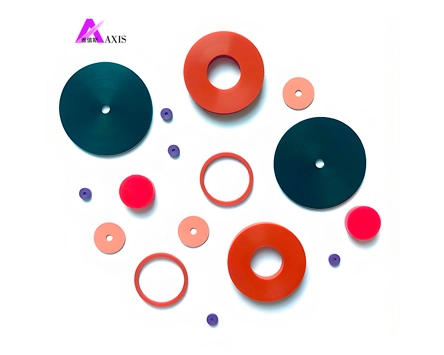
Traceable production and quality systems support high-volume, just-in-time delivery. Advanced rubber compounding and O-ring production at AXIS facilities.
Conclusion – Selecting the Right Shore A Hardness Improves Sealing Life and System Reliability
Proper O-ring hardness selection, grounded in pressure, temperature, media, and design considerations, dramatically reduces failures like extrusion, leakage, and compression set. By partnering with experienced manufacturers like AXIS, engineers gain access to tailored solutions that go beyond off-the-shelf products.
Contact the AXIS engineering team today to optimize your sealing performance with custom hardness formulations engineered for your exact application.