Email Us

NBR vs FKM: Which Rubber Material Is Right for Your Sealing Application?

Table of Content [Hide]

    This article is written by Axis (Xi'an) Technology Co., Ltd., a professional custom rubber sealing components manufacturer based in Xi'an, China. We specialize in custom O-rings, oil seals, and gaskets for industrial and automotive applications.


    Key Takeaways

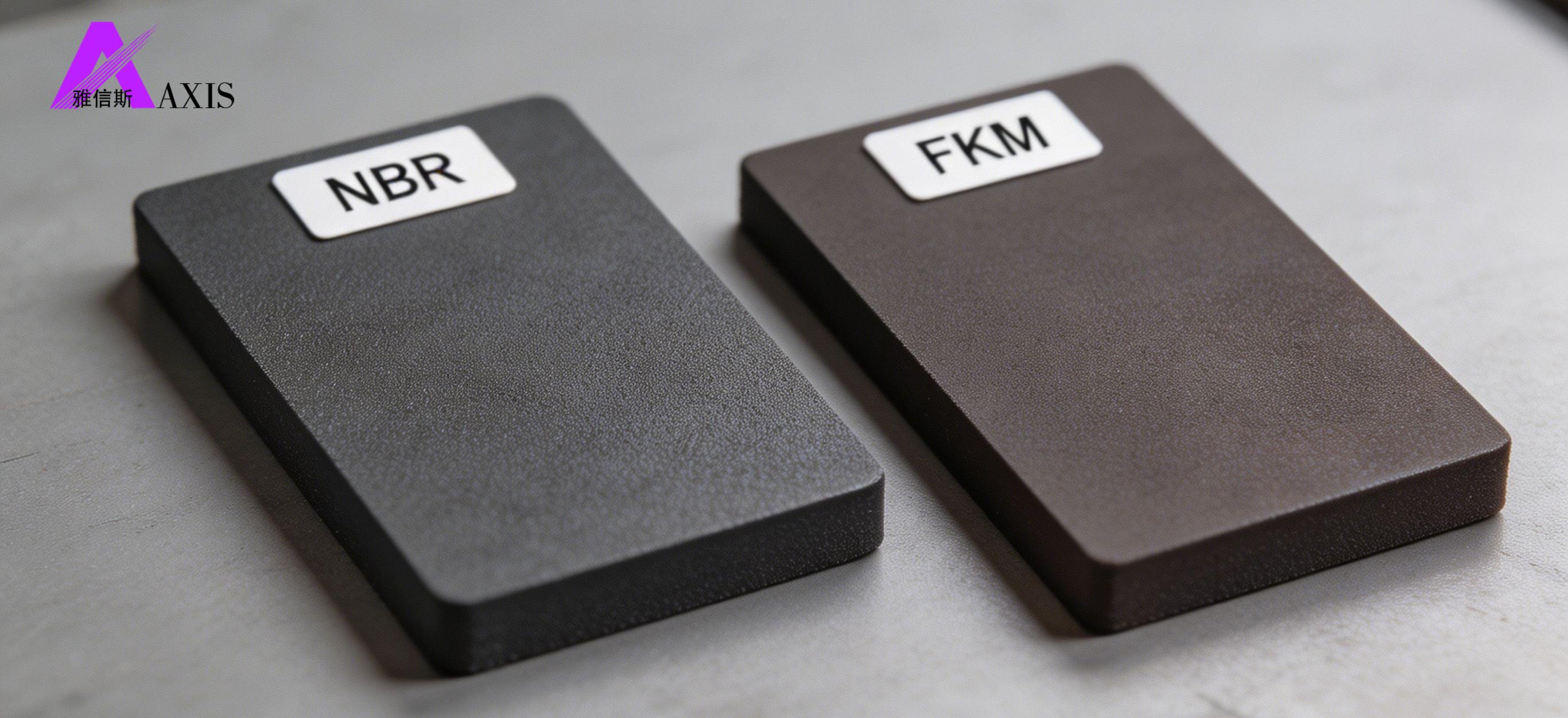
    • NBR: NBR (Nitrile Rubber) is the cost-effective choice for most general-purpose oil and hydraulic applications up to 120°C

    • FKM: FKM (Fluorocarbon Rubber / Viton) delivers superior performance in high-temperature and chemical environments up to 230°C, but costs more

    • Selection: The right choice depends entirely on your operating temperature, chemical exposure, and budget

    • Standards: Both materials work with international standards (ASTM/AS568/ISO 3601) and we can produce custom sizes for any application

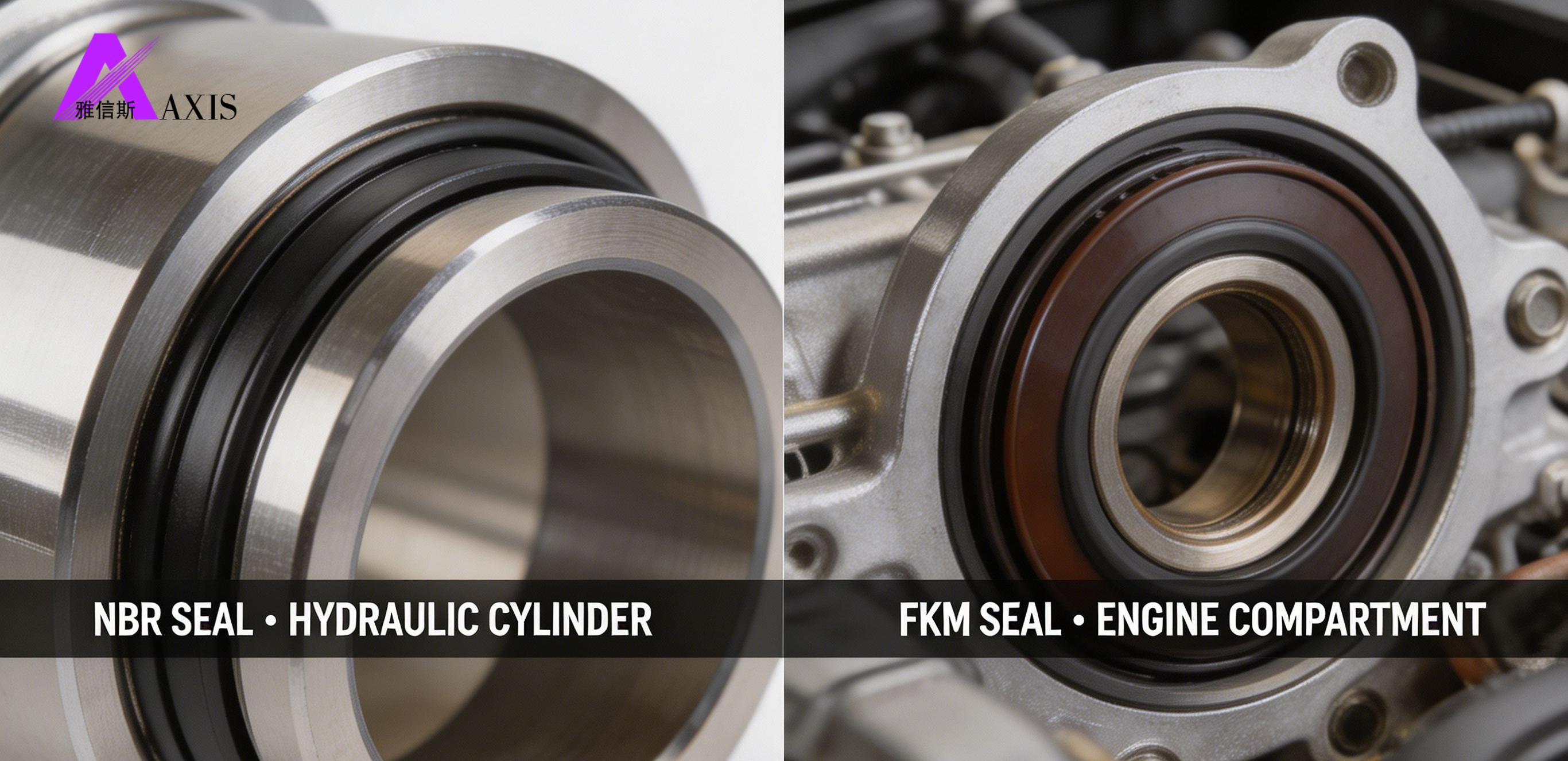
    nbr-vs-fkm-which-rubber-material-is-right-for-your-sealing-application-1.jpg


    NBR and FKM are two of the most common rubber materials used for industrial sealing, but many engineers struggle to choose between them. The short answer is simple: if your application stays under 120°C and doesn't handle aggressive chemicals, go with NBR to save money. If you need higher temperature or chemical resistance, spend the extra on FKM.


    Let's break down the key differences to help you make the right call for your project.


    NBR (Nitrile Rubber): The Cost-Effective Workhorse

    NBR is the most widely used rubber material for general industrial sealing — and for good reason.


    Key Properties

    • Temperature range: -30°C to 120°C continuous operation

    • Hardness options: 60-90 Shore A

    • Oil resistance: Excellent (5/5 rating)

    • Cost: Low — typically 1/3 to 1/2 the price of FKM

    • Standards compliance: Meets ASTM D2000 for general industrial use


    Best Applications for NBR

    • General hydraulic systems

    • Fuel system components

    • Automotive oil seals

    • General-purpose O-rings for static applications


    NBR is perfectly reliable for most common industrial environments. It's what we recommend for most customers when operating conditions don't push beyond its limits.


    FKM (Fluorocarbon Rubber / Viton): Premium Performance for Demanding Environments

    FKM is the premium choice when your application pushes the limits of what NBR can handle. The higher cost buys you dramatically better performance in extreme conditions.


    Key Properties

    • Temperature range: -20°C to 230°C continuous operation

    • Hardness options: 70-90 Shore A

    • Chemical and heat resistance: Exceptional (5/5 rating)

    • Compression set: < 10% after 72h at 200°C — much better than NBR

    • Cost: High — but you get what you pay for

    • Standards compliance: Meets AMS/ASTM specifications for aerospace and chemical processing


    Best Applications for FKM

    • Chemical processing equipment

    • Automotive engine compartments (high underhood temperatures)

    • Aerospace fuel systems

    • High-temperature industrial processes


    If your application goes beyond 120°C, or you need resistance to aggressive chemicals, FKM is almost always the right long-term choice — the extra upfront cost avoids costly downtime from premature failure.


    Quick Comparison Table

    Property

    NBR

    FKM

    Max Continuous Temperature

    120°C

    230°C

    Min Temperature

    -30°C

    -20°C

    Hardness Range

    60-90 Shore A

    70-90 Shore A

    Oil Resistance

    Excellent (5/5)

    Excellent (5/5)

    Chemical Resistance

    Good

    Exceptional

    Compression Set

    Moderate

    < 10% at 200°C

    Cost

    Low (1/3 to 1/2 of FKM)

    High

    Typical Standards

    ASTM D2000

    AMS/ASTM


    nbr-vs-fkm-which-rubber-material-is-right-for-your-sealing-application-2.jpg


    How to Choose Between Them

    Ask yourself these three questions:

    • 1. Temperature: What's your maximum continuous operating temperature? — If it's over 120°C, go FKM.

    • 2. Chemicals: What chemicals will the seal contact? — Aggressive chemicals → FKM. General hydraulic oil → NBR works fine.

    • 3. Budget: What's your budget? — If cost is critical and conditions fit NBR, it will serve you well.

    Still unsure? Send us your application details, our engineering team will recommend the best material for free.


    Frequently Asked Questions

    Q: Can FKM replace NBR in all applications?

    A: Technically yes, but it's almost always overkill and a waste of money. NBR does the job just fine for most common applications at a much lower cost.


    Q: Do you offer both materials in custom sizes?

    A: Yes, we produce custom NBR and FKM seals to any drawing or sample, following AS568/ISO 3601 tolerance standards.


    Q: What's the minimum order quantity for custom seals?

    A: Our standard MOQ is 500 pieces for custom molded seals. We can accept smaller trial orders for product development (customer covers shipping cost).


    Q: Are your materials certified?

    A: Yes. All our materials meet relevant international certifications: ISO 9001:2015, REACH (EU), FDA for food-grade materials, and AMS/ASTM for FKM.


    Conclusion

    Choosing between NBR and FKM doesn't have to be complicated. Stick to this simple rule: go with NBR for general applications under 120°C to save money, upgrade to FKM when you need higher temperature or chemical resistance.


    At Axis Rubber, we produce custom NBR and FKM seals to your exact specifications, with all the required certifications and consistent tolerance control. Whether you need 500 pieces or 50,000 pieces, we can deliver on time at competitive prices.


    If you have an upcoming sealing project and need a quote, get in touch with our team today:

    peter@axisrubber.com    |    www.axisrubber.com
    References
    Products
    Quick Links
    Blog Services Company Profile
    Add:
    Room 502, Block D, Galaxy Huating, No. 149 Weiyang Road, Xi'an, Shaanxi Province, China
    Quick Links
    Blog End Cap Waterproof Ring Auto Parts Home Blog Application Company Profile Rubber Seals O-ring Ignition Coil Boot OE NO.27302-26640 Ignition Coil Boot For Elantra VV DZ95259590067 Engine Mount for Left Rear of Heavy Duty Truck EPDM O-RING Auto Rubber Wire Harness Sheath Rubber Muff (3716612800) Manhole Gaskets Ignition Coil 07K905715D Automobile Industry Applications NBR vs FKM: Which Rubber Material Is Right for Your Sealing Application? Products Ignition Coil OE NO.27301-26640 Ignition Coil Boot For Elantra VV Rubber Washers Ignition Coil 22448JA00C High-Performance Automotive O-Ring Solutions Application Insights 5 Common Causes of Rubber Seal Failure (And How to Avoid Them) Company FAQ Automobile Engine Accessories Oil Seal OE NO.55571790 Ignition Coil Boot For Excelle、Cruze FKM O-RING Sunroof Drain Pipe Fitting FDA Gaskets TC Oil Seal Ignition Coil 27301-3C000 Rubber Muff 165x135x86 Automotive A/C O-Rings NBR vs EPDM vs Silicone vs FKM: How to Choose the Right Rubber Material for Your Seals Services OE NO.CM5Z-12029-A Ignition Coil Boot For Focus、Mondeo NBR O-RING OEM TG Oil Seal Ignition Coil 273002E000 Rubber Muff 1200 EPDM vs. Viton O-Rings: Key Differences and When to Choose EPDM Engine & Fuel System O-Rings Automobile Shock Absorber OE NO.24100593 Ignition Coil Boot For Buick Envision 81.06225.6008 SHACMAN H3000 Radiator Bracket Assembly Automotive ECU Wiring Dust Cap Solutions Y-Type Hydraulic Oil Seal Ignition Coil 273012B010 Rubber Muff ZDY6000 What Is an Ignition Coil? A Complete Guide to Function, Construction, and Types HNBR O-Ring Transmission O-Rings Rubber Parts For Automobile Bodies OE NO.06A 905 115A Ignition Coil Boot For Skoda 1.8T Truck Water Tank Bracket 81.06245.0043 for X3000/M3000 Rubber Gasket Ignition Coil 12578224 What Are EPDM O-Rings Used For? Top Industrial Sealing Applications News Coal Mine Oilfield Rubber Accessories OE NO.077-905-115E Ignition Coil Boot For Audi S4 Automobile Special Over-Wire Rubber Sleeve Ignition Coil 19005270 The Ultimate Guide to EPDM Rubber O-Rings: Benefits, Selection, and Buying Tips Contact Us OE NO.07K905115F Ignition Coil Boot For Audi Ignition Coil 036905715F Automobile Shock Absorber DZ9114593001 Rubber Mount Signs of a Bad Ignition Coil: 7 Common Symptoms and How to Spot Them Early OE NO.3705800 Ignition Coil Boot For BYD F3 Ignition Coil 55571790 How Long Do EPDM O-Rings Last? Factors Affecting Lifespan and Maintenance Tips Search Result OE NO.90919-02239 Ignition Coil Boot For Toyota Corolla Ignition Coil 55579072 What is a Rubber Gasket? Beginner's Guide to Functions and Types Sitemap OE NO.90919-02240 Ignition Coil Boot For Toyota Yaris SILICONE O-RING Ignition Coil 9091902252 TC vs TG Oil Seals: Comprehensive Comparison and Selection Guide 404 Inflatable O-ring OE NO.MD362913 Ignition Coil Boot For Mitsubishi Clutch Fork Dust Boot D-1602014-50-00 Ignition Coil 12138616153 Rubber Gasket vs O-Ring: Key Differences, Materials, and When to Use Each Privacy Policy OE NO.099700-181 Ignition Coil Boot For 2012 - Model Honda Civic Clutch Fork Dust Boot J-1602240-00-00 Ignition Coil SMW250963 Rubber Gasket Applications Across Industries: Automotive, Aerospace, and Beyond Submission Successful! OE NO.27301-3C000 Ignition Coil Boot For Changan Yuexiang、Kia Carens Heavy Truck Brake Disc Series Seals Submission Successful! Differences Between TB and TC Oil Seals: What You Need to Know Taggg OE NO.27301-2B100 Ignition Coil Boot For Hyundai Accent Heavy Duty Truck Gearbox Rubber Dust Cover Choosing the Right O - Rings for Hydraulic Systems: Types and Material Recommendations Search Result Products Rubber Pad for Automotive Battery Symptoms, Diagnostic Methods, and Repair Solutions for Ignition Coil Rubber Boot Failure Custom Rubber O-Rings Manufacturer Search Result Others Rubber Parts for Window Regulator Motor Ignition Coil Rubber Boot: Stuck Removal Techniques and Prevention Methods Wire Over Hole Rubber Sheath Rubber Neoprene EPDM Solenoid The Critical Role of O-Rings in Hydraulic Cylinders: Why They Matter and How to Maintain Them The Essential Role of Ignition Coil Boots:what the do and Why They’re Necessary Understanding the Differences in O-Ring Materials What are the differences between TC, SC, TF, and SF oil seals? Properties and applications of fluororubber (FKM) O-Ring Causes and teatment methods of rubber frosting Characteristics of rubber (raw rubber) materials and technical requirements of some rubber products Analysis of rubber frosting precipitates and their solutions Functions of major compounding agents commonly used in rubber products O-ring butt joint and introduction of NBR formula materials Six classifications of rubber accelerators How Advanced Rubber Seals Protect Your Machines and Products How Ignition Components Make or Break Performance How Advanced Rubber Components Protect and Enhance Your Car's Performance How Rubber Seals Protect Your Critical Equipment? How Advanced Shock Absorbers Transform Your Driving Experience Viton vs NBR O-Rings: Which Material Is Better for Your Application? Inflatable O-Ring Technology: Versatile, Reusable, Reliable How O-Ring Seals Work: The Complete Guide to Reliable Sealing Solutions Services Company Profile
    Add:
    Room 502, Block D, Galaxy Huating, No. 149 Weiyang Road, Xi'an, Shaanxi Province, China