As the "energy core" of internal combustion engine ignition systems, the ignition coil directly impacts starting reliability, power output and fuel economy. Axis (xi'an) Technology Co., Ltd ("Axis") has over a decade of R&D experience in ignition system cores. Backed by ISO9001 and IATF16949 certifications, its ignition coils fit gasoline, natural gas and other engines. Undetected coil faults often cause spark plug carbon deposition and catalytic converter failure, doubling maintenance costs. This article outlines 7 typical failure signs and practical early identification methods for equipment maintenance.
Core Cognition: The Essential Function of Ignition Coils
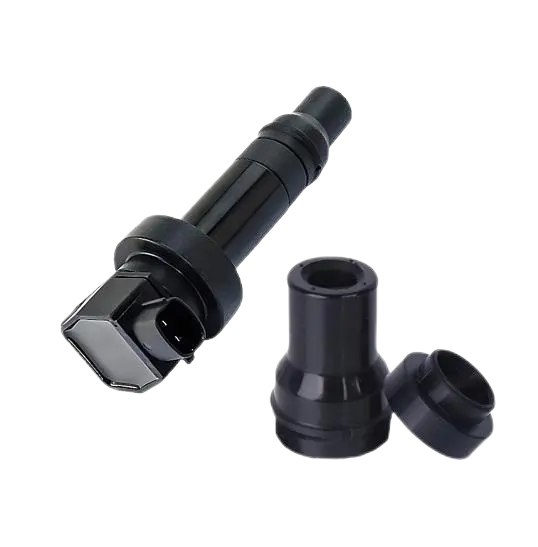
An ignition coil is a pulse transformer that uses electromagnetic induction to convert 12V/24V DC from the battery into 15000V-40000V high voltage, powering spark plugs to ignite the mixture. Axis coils, with high-silicon steel cores and oxygen-free copper wires, undergo vacuum potting. They stabilize voltage at -40℃~120℃ and last 30% longer than industry average.
Ignition coil faults stem from insulation aging, coil ablation or controller failure, with distinct stage-specific symptoms. Early detection prevents severe issues:
1. Engine Idle Vibration & Acceleration Hesitation: Common early sign. Unstable coil voltage reduces cylinder ignition efficiency, causing >50rpm idle speed fluctuation and steering wheel vibration. The vehicle jerks during rapid acceleration/climbing. Axis tip: Check ignition advance angle via OBD; focus on coils if deviation exceeds 1°CA.
2. Difficult Starting & Frequent Stalling: Faulty coils fail to generate enough high voltage for ignition. Symptoms include "normal starter but no ignition" or stalling within 1-2 minutes of starting, worsening below -10℃. Differentiate from weak battery (low starter speed vs. strong starter with coil issues).
3. Obvious Damage to Ignition Coil Appearance: Intuitive faults can be found through regular visual inspection, such as cracked insulating shell, severe carbon deposition or oil seepage at the high-voltage output end, and carbonization and falling off of the insulating layer of the coil lead wire. Axis recommends using an infrared thermometer for auxiliary testing: the normal working temperature of the coil should be ≤100℃; if the local temperature suddenly rises to above 120℃, it indicates an internal short-circuit risk and needs to be replaced immediately.
4. Abnormally Increased Fuel Consumption: Poor ignition causes incomplete combustion; ECU increases fuel injection, raising fuel consumption by >15%. The fuel range shortens, with unburned oil mist from the exhaust (more visible when cold). Confirm with coil performance tests.
5. OBD Fault Light Illuminated & Exclusive Fault Codes Stored: The ECU of modern vehicles has an ignition system monitoring function. When the coil fails, the fault light will be triggered and the corresponding code will be stored. Common codes include P0350 (Ignition Coil A Circuit Malfunction) and P0351-P0358 (corresponding to 1-8 cylinder coil faults). Note: Some intermittent faults need to re-read the data under hot engine conditions to avoid misjudgment.
6. Significant Power Attenuation & High-Speed "Weakness": Under the same accelerator opening, the vehicle's acceleration performance decreases significantly, such as the 0-100km/h acceleration time is extended by more than 3 seconds; when driving at high speed (>100km/h), there is no obvious pushing feeling when stepping on the accelerator, and the power response is slow. This symptom is easily confused with injector faults, which can be identified by the "coil swap test" - swap the suspected faulty coil with the normal cylinder coil; if the fault moves with the coil, the coil failure is confirmed.
7. Black Exhaust Smoke & Pungent Odor: Incomplete combustion produces black carbon particles and unburned fuel odor. HC emissions exceed 1000ppm (gasoline vehicle standard). This typically accompanies idle vibration, indicating multi-cylinder coil failure.
Axis Guarantee: Full-Cycle Service from Prevention to Solution
Aiming at the common causes of ignition coil faults, Axis strengthens three core advantages in product design: using imported epoxy resin to improve insulation performance and reduce aging risks; built-in automotive-grade control chips with a response time ≤1μs to avoid voltage fluctuations; full-process automated production ensures uniform coil winding and reduces magnetic leakage and ablation. The products have passed CE, UL, and CQC certifications, support customized development, and are compatible with mainstream models such as Toyota, Volkswagen, and BMW, as well as construction machinery engines.
To obtain the ignition coil fault diagnosis manual, detailed technical parameters or free samples, welcome to visit the official website www.axisrubber.com. Axis professional technical team will provide full-cycle support from selection, testing to replacement, helping to reduce operation and maintenance costs.
As one of the trusted ignition coil manufacturers, Axis provides high-performance ignition coils engineered for long-term stability, fast response, and reliable spark energy output across a wide range of gasoline and natural gas engines. With strict material selection, advanced automated production lines, and ISO/IATF-certified quality control, Axis delivers ignition solutions compatible with passenger vehicles, commercial fleets, construction machinery, and generator systems. Whether for OEM customization or aftermarket replacement, Axis ensures consistent performance, extended service life, and cost-effective solutions for global industrial customers.