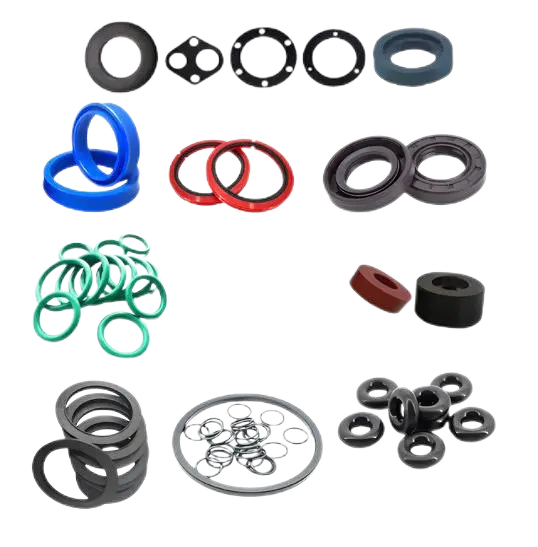
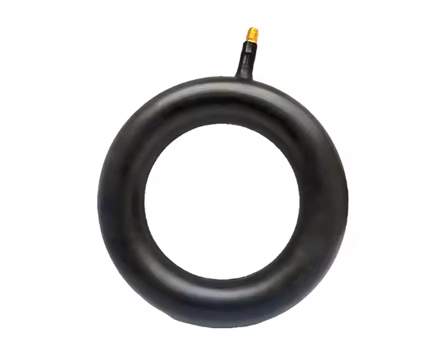
As a key component in the industrial sealing field, EPDM (Ethylene Propylene Diene Monomer) O-Rings are widely applied in plumbing systems, automotive manufacturing, outdoor industrial equipment and other scenarios. Their service life is directly related to equipment operation stability and operation and maintenance cost control. Axis (xi'an) Technology Co., Ltd (hereinafter referred to as "Axis"), relying on the ISO9001 quality management system and more than ten years of experience in rubber product R&D, focuses on the performance optimization and application research of EPDM materials. This article will systematically analyze the service life range, core influencing factors and professional maintenance strategies of EPDM O-Rings.
General Service Life Range
The service life of EPDM O-Rings is restricted by multiple factors such as working conditions, material formulas and installation processes, showing significant differences in lifespan ranges: under conventional working conditions (ambient temperature 20-30℃, working pressure ≤5MPa, contact medium as clean water or weakly alkaline solution), the standard service life is 3-5 years; under optimized working conditions (ambient temperature 15-25℃, static sealing form, no dust and corrosive medium interference), the service life can be extended to 5-8 years; while under harsh working conditions (ambient temperature >130℃, working pressure >20MPa, contact with strong corrosive medium), the service life will be shortened to 1-2 years. The EPDM O-Rings produced by Axis adopt imported high-purity EPDM raw rubber and special anti-aging additives. Verified by 2000-hour accelerated aging test, the service life under the same working conditions is more than 30% higher than the industry average level.
Core Influencing Factors
1. Temperature Factor: The ideal working temperature range of EPDM O-Rings is -40℃~120℃. When the ambient temperature exceeds 120℃, the rubber molecular chains will break rapidly, resulting in material softening and elastic attenuation. Test data shows that for every 10℃ increase in temperature, the service life is shortened by about 50%; when the ambient temperature is lower than -40℃, the material will undergo brittle transition, with mechanical properties decreased, and it is prone to fracture failure during installation and equipment operation. For extreme temperature scenarios, Axis has developed special formulas for extreme environments: low-temperature products can withstand -55℃, and high-temperature products can be adapted to 150℃ working environment for a long time.
2. Media Compatibility: The molecular structure characteristics of EPDM material endow it with excellent resistance to polar media. It can be stably adapted to media such as water, steam, weak acids and alkalis (pH 4-10), and is widely used in plumbing fixtures, automotive cooling systems and other fields; however, this material has poor compatibility with non-polar media. If it is in long-term contact with petroleum-based oils, strong solvents (such as acetone, toluene) and other media, it is prone to swelling, strength attenuation and sealing failure. For complex medium scenarios, Axis can provide professional medium compatibility testing services, and customize exclusive adapted formulas by adjusting the ratio of ethylene and propylene monomers.
3. Pressure and Sealing Form: The conventional design working pressure of EPDM O-Rings does not exceed 10MPa. When the working pressure exceeds 15MPa, back-up rings must be used to prevent "extrusion damage". Classified by sealing form, in static sealing (such as flange sealing), the O-Ring has no relative movement and only bears constant compressive stress, so it has a longer service life; in dynamic sealing (such as piston, valve core sealing), there is continuous friction and wear between the O-Ring and the sealing surface, accompanied by frictional heat generation, and its service life is 30%-50% shorter than that of static sealing. Axis has developed a special low-friction formula for dynamic sealing scenarios, and the product surface has undergone special modification treatment, which can effectively reduce the wear rate.
4. Installation and Environmental Interference: According to Axis failure analysis data, about 30% of the early failures of EPDM O-Rings are caused by non-standard installation processes, including excessive dimension of sealing groove, burrs or impurities in the groove, and surface scratches during installation. In addition, in outdoor application scenarios, UV radiation, ozone erosion and high-humidity environment will accelerate material aging. Therefore, special EPDM products with UV-resistant and ozone-resistant additives should be selected for outdoor equipment sealing.
Maintenance Tips for Longer Lifespan
1. Accurate Selection Strategy: For high-temperature working conditions, modified EPDM formulas with high ethylene content should be selected; for food processing and drinking water contact scenarios, food-grade EPDM products that meet the FDA 21 CFR 177.2600 standard are required. In terms of hardness selection, products with Shore hardness 70A-80A are recommended for static sealing, and products with 60A-70A can be selected for dynamic sealing according to friction coefficient requirements. Axis can provide standardized and customized products with a full hardness range of 20A-90A.
2. Standardized Installation Process: Before installation, the sealing groove and O-Ring surface should be thoroughly cleaned with anhydrous ethanol or special rubber cleaner to remove oil, dust and other impurities; when the installation resistance is large, silicone-based grease (petroleum-based grease is strictly prohibited) can be evenly applied on the O-Ring surface to reduce assembly resistance; special tools should be used for assistance during installation to avoid direct external force pulling, and at the same time, the fit gap between the sealing groove and the O-Ring should be controlled within 10%-15% of the O-Ring cross-sectional diameter.
3. Regular Maintenance and Management: For key industries such as chemical industry and food industry, it is recommended to establish a weekly regular inspection mechanism, focusing on checking abnormal conditions such as leakage at the sealing part, O-Ring deformation and material aging; to avoid the risk of sudden failure, it is recommended to implement preventive replacement when the product reaches 70%-80% of its conventional service life. Spare O-Rings should be stored in a cool and dry environment with a temperature of 0-25℃, away from direct sunlight, high-temperature heat sources and chemical reagents.
The EPDM O-Rings produced by Axis, one of the most trusted EPDM O-ring manufacturers in China, have passed international standard certifications such as ASTM D2000 and ISO 3601, and the dimensional accuracy error is strictly controlled within ≤±0.02mm. The company has established a core R&D team of 5 people, which can customize exclusive formulas for special working conditions such as extreme temperature and complex medium. Each batch of products must pass multiple performance tests such as compression set, aging resistance and sealing performance. Axis can provide 3-5 days of rapid prototyping service and full-process non-standard customization support. For product material test reports or technical solutions, please visit the official website www.axisrubber.com or contact professional technical consultants.