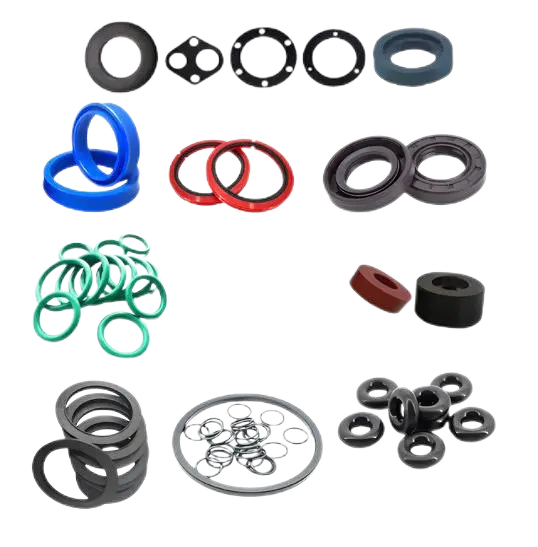
O-Rings are among the most essential yet often overlooked components in modern engineering. These simple toroidal (donut-shaped) seals, typically made from various elastomers, create a highly effective barrier against fluid and gas leakage in both static and dynamic applications. When compressed in a properly designed groove, the O-Ring deforms to fill microscopic gaps, maintaining a reliable seal even under varying pressure and temperature conditions.
In industries such as hydraulics, automotive manufacturing, pump and valve systems, aerospace, and heavy machinery, O-Rings play a critical role in preventing costly leaks, contamination, and system failures. For Axis Rubber customers, accurate measurement is non-negotiable. An incorrectly sized O-Ring can cause immediate leaks, gradual seal degradation, equipment overheating, pressure loss, or even catastrophic failure leading to expensive downtime and safety risks.
Whether you are maintaining hydraulic cylinders, rebuilding pumps, servicing valves, or supporting OEM production, taking the time to measure O-Rings correctly saves time and money while ensuring long-term reliability.
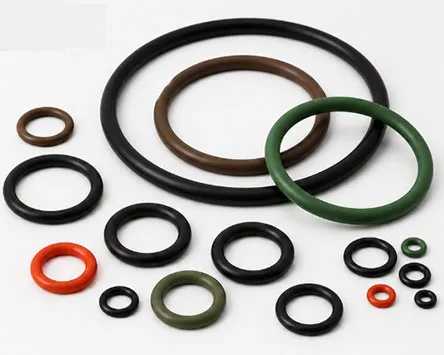
Every O-Ring has three fundamental dimensions that work together to determine fit, compression, and sealing performance. Understanding these measurements is the foundation of proper selection and replacement.
| Dimension | Meaning | Why It Matters |
|---|---|---|
| ID (Inner Diameter) | The inside diameter of the ring | Ensures the O-Ring fits correctly around a shaft or inside a groove without being too loose or tight |
| CS (Cross Section / Cord Thickness) | The thickness of the rubber cord | Controls the amount of squeeze (compression) and directly affects sealing force and longevity |
| OD (Outer Diameter) | ID + 2 × CS | Serves as a quick reference to verify overall size and compatibility |
In real-world industrial procurement and maintenance, technicians typically focus on ID and CS, as these two values are sufficient for most standard AS568 or ISO sizes. However, calculating OD helps double-check compatibility during installation planning.
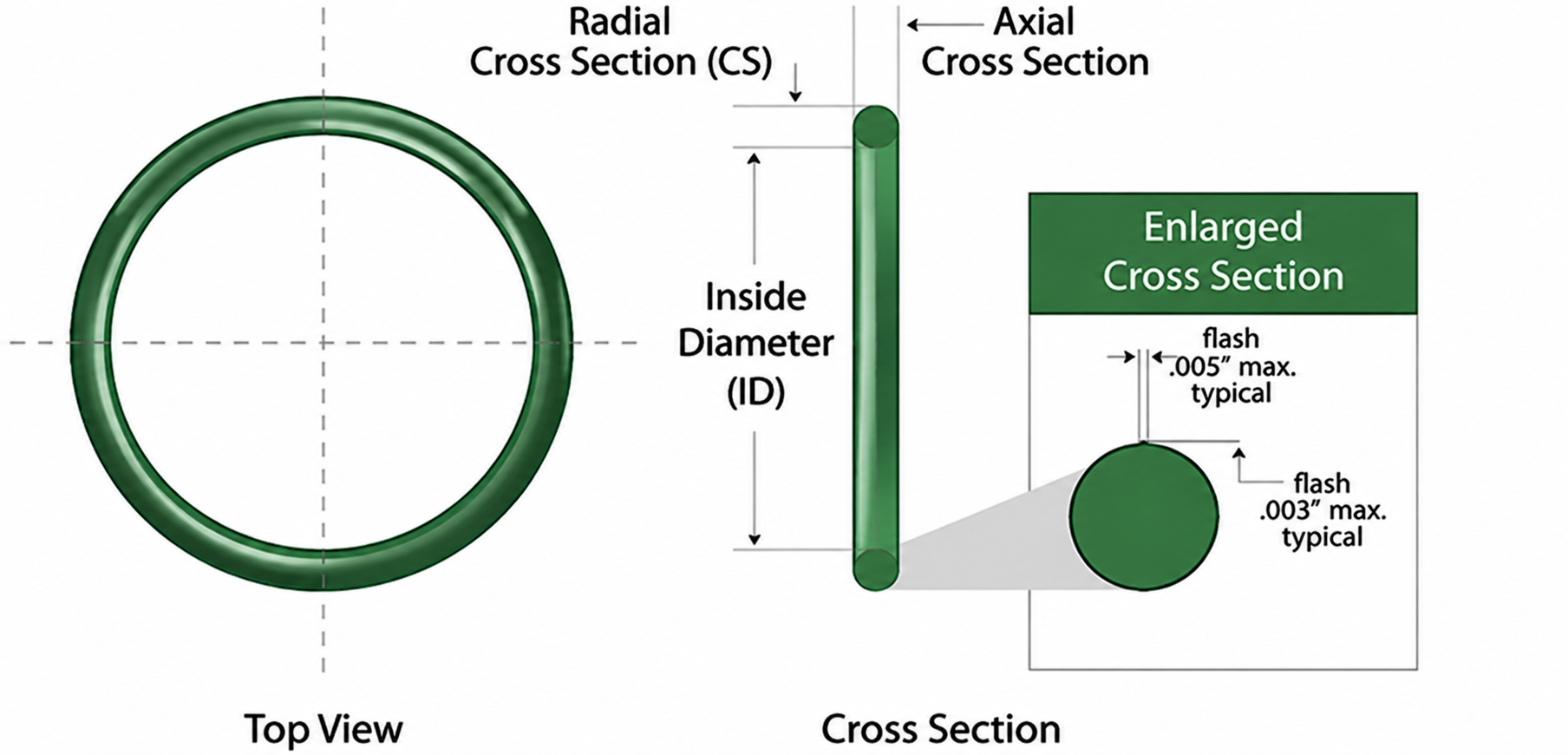
Measuring the Inner Diameter correctly is the most important first step. The goal is to determine the true resting size from the inner wall to the opposite inner wall.
Use a high-precision digital or vernier caliper. Avoid tape measures or standard rulers, as they lack the necessary accuracy for sealing components.
Lay the O-Ring completely flat on a clean, non-slip surface. Do not stretch, twist, or hang it.
Position the caliper jaws gently inside the ring and measure the maximum internal distance.
Rotate the O-Ring and take measurements at least three different positions (e.g., 0°, 120°, 240°).
Calculate the average of your readings to account for any minor ovality.
Common Pitfalls to Avoid:
×Stretching the O-Ring — this artificially increases the measured ID
×Measuring the outer edges and assuming it is the ID
×Taking only a single measurement
onsistent, repeatable measurements help ensure your replacement O-Ring will seat properly and maintain seal integrity under pressure.
The Cross Section (CS), also called cord thickness, is crucial because it determines how much the O-Ring will compress in the groove — directly influencing sealing pressure and service life. Rubber materials are elastic and compressible, so excessive force during measurement can lead to inaccurate (usually smaller) readings. Inspect the O-Ring and select a section that shows no signs of compression, flattening, or damage. Hold the caliper perpendicular to the cord and close the jaws with very light, consistent pressure — just enough to make contact. Take multiple readings around the circumference and average them. For critical applications, consider using a micrometer or specialized O-Ring measuring tools.How to Measure O-Ring Cross Section (CS Thickness)
Best Practices for Accurate CS Measurement
Proper CS measurement helps prevent under-compression (leaks) or over-compression (rapid wear and extrusion).
Industrial O-Rings follow established sizing standards that guarantee interchangeability and quality across suppliers. These standards were developed to simplify procurement and ensure consistent performance worldwide.How Are O-Rings Measured in Industry Standards?
Standard Region Primary Usage AS568 United States Hydraulic systems, automotive, pumps, valves, and general industrial machinery ISO 3601 Global / International Precision equipment, aerospace, and international manufacturing
These standards define hundreds of common sizes based on ID and CS combinations. When you provide accurate measurements to Axis Rubber, we can quickly match them to the closest standard size or recommend custom manufacturing if needed.
Material selection is just as important as dimensional accuracy. Different elastomer compounds offer vastly different resistance profiles to oils, fuels, chemicals, temperature extremes, and environmental conditions.How to Measure O-Ring Material (Compound Identification)
Material Key Resistance Typical Industrial Applications NBR (Nitrile) Excellent oil, fuel, and hydraulic fluid resistance Hydraulic cylinders, pumps, valves, automotive systems EPDM Superior weather, water, steam, and ozone resistance Cooling systems, outdoor equipment, potable water applications FKM / Viton High temperature and aggressive chemical resistance Chemical processing, aerospace, high-performance valves Silicone Wide temperature range and flexibility Food-grade, medical, and extreme temperature environments
While color can provide initial clues, professional identification often requires FTIR spectroscopy, hardness testing, or density analysis. Axis Rubber’s technical team can assist with material verification and recommendations based on your operating conditions. As a professional custom O-ring manufacturer, Axis Rubber specializes in producing high-performance sealing solutions tailored to different application environments and operating conditions. Based on material performance requirements, we supply a full range of elastomer compounds, including EPDM O-RINGS, FKM O-RING, NBR O-RING, HNBR O-RING, and SILICONE O-RING. Each material is engineered to meet specific resistance needs—whether it is oil and fuel resistance, extreme temperature stability, chemical compatibility, or weather and ozone durability. Our engineering team supports customers in selecting the most suitable O-ring compound to ensure long-term sealing reliability and optimal system performance in demanding industrial applications.
Hardness, measured on the Shore A scale, indicates the material’s resistance to indentation and affects both sealing performance and durability. Softer compounds (lower Shore A) offer better sealing on irregular surfaces, while harder ones provide greater extrusion resistance. Most industrial applications use 70 Shore A, but values can range from 50A (soft) to 90A (very firm) depending on the application. Place the O-Ring or a thick section of the material on a flat, rigid surface. Hold the Shore A durometer perpendicular to the surface. Press firmly and steadily until the foot makes full contact, then read the value immediately. Take several readings and average them.How to Measure O-Ring Hardness (Shore A)
Measurement Procedure
Measure ID — Inner Diameter using precision calipers Measure CS — Cross Section thickness with light pressure Identify Material — Compound type (NBR, FKM, EPDM, etc.) Test Hardness — Shore A durometer reading Match to Standard — Cross-reference with AS568 or ISO 3601 Following this systematic approach ensures you select or order the right O-Ring every time, minimizing downtime and maximizing seal reliability.Step-by-Step Summary: How to Measure an O-Ring Correctly
Complete Professional Measurement Workflow
Accurate measurement is only half the battle — proper installation ensures the O-Ring performs as expected throughout its service life. Thoroughly clean the groove and all mating surfaces to remove dirt, debris, old sealant, or damage. Inspect the groove dimensions and surface finish for compliance with design specifications. Apply a thin, even layer of compatible lubricant (avoid petroleum-based lubricants with EPDM or Silicone). Carefully roll or slide the O-Ring into position without twisting, rolling, or excessive stretching. After assembly, perform a pressure test or leak-down test to verify seal integrity before putting the system into operation.How to Install an O-Ring Properly (After Measurement)
Even experienced technicians can make errors that compromise sealing performance. Here are the most frequent issues we see in the field: Stretching or distorting the O-Ring during measurement, leading to oversized readings Using inadequate tools such as tape measures or low-precision rulers Applying too much pressure when measuring CS, resulting in artificially low values Confusing Inner Diameter with Outer Diameter Failing to take multiple measurements and average them Ignoring visible signs of compression set or damage on used O-Rings These mistakes frequently cause leaks, premature failure, and unnecessary replacement costs. Always use calibrated instruments and follow consistent procedures.Common Mistakes When Measuring O-Rings
A: The standard method involves accurately measuring the Inner Diameter (ID) and Cross Section (CS), identifying the material compound, and checking hardness. These values allow matching to standard sizes or custom manufacturing. A: Use a metric digital caliper to take direct readings in millimeters. Axis Rubber accepts both metric and imperial specifications and can convert between them. A: While a high-quality ruler can give a rough estimate in emergencies, professional results require precision calipers and a durometer for reliable industrial applications. A: The most accurate approach combines multiple averaged caliper measurements, Shore A hardness testing, and material verification, preferably supported by Axis Rubber’s technical expertise. Axis Rubber has built a strong reputation as a reliable partner for industrial sealing solutions. We combine advanced manufacturing capabilities with strict quality control to deliver O-Rings that consistently meet or exceed industry standards. Tight dimensional tolerances and comprehensive inspection processes Wide selection of premium materials including NBR, FKM (Viton), EPDM, Silicone, and specialty compounds Custom O-Ring manufacturing capabilities for non-standard ID, CS, OD, and hardness requirements Expert technical support to help you select the optimal sealing solution for your specific operating conditions Fast turnaround on both standard and custom orders, minimizing your downtimeFAQ – How to Measure O-Rings
Why Choose Axis Rubber for Precision O-Rings