Oil seals guard rotating shafts by keeping lubricant in and contaminants out. Among the myriad type codes, TC and TG sit in the front row of daily maintenance yet are often mixed up. This guide clarifies their geometry, merits and limits so you can pick once and seal right.
Lip architecture
TC is a classic dual-lip seal: a primary sealing lip loaded by a garter spring and a secondary dust lip standing 0.2-0.4 mm behind it. TG is technically still “dual-lip”, but the second lip is 30-40 % taller, thicker and also spring-loaded, turning the seal into a fully “tandem” two-line defence. In muddy gearboxes the extra lip scrapes off paste that would otherwise creep to the main lip.
Case style
Both use a rubber-covered OD for better conformity to light-scratched housings and corrosion protection. TG often adds 0.5 mm more rubber thickness and a slightly rounded nose, easing press-in when the bore has a lead chamfer.
Material & temperature
Standard NBR covers -30 °C to 120 °C for both. TG’s outer lip is usually made of the same NBR grade, but high-end TG variants switch the second lip to HNBR or FKM, pushing peak temperature to 150 °C or 180 °C without losing dust-shedding elasticity.
Pressure & speed
At up to 0.05 MPa (7 psi) and 10 m/s peripheral speed the TC performs well. TG tolerates 0.08 MPa because the rear lip shares the load; however, two loaded lips generate more heat, so practical speed drops to ≈ 8 m/s unless a micro-pump texture is moulded on the lip face.
Friction & power loss
Bench tests show TG consumes 15-25 % more torque, translating into 0.1-0.3 kW extra on a 50 mm agricultural PTO shaft. Use TG only when contamination risk outweighs energy cost.
Typical playgrounds
TC: passenger-car engines, electric-motor bearings, gear pumps in clean factories.
TG: axle hubs of off-road vehicles, sugar-cane harvesters, mining conveyors, paper-mill rolls—any place that sees a dust storm or high-pressure wash-down.
Cost & life
A TG seal is roughly 1.3-1.5× the price of TC in NBR, but field data show TG extending replacement intervals by 2-3× in severe dirt. The total cost of ownership favours TG whenever downtime labour exceeds twice the seal price.
Speed > 9 m/s and clean → TC with low-friction lip coating
Seal right the first time: match the environment, then let the lip geometry work for you.
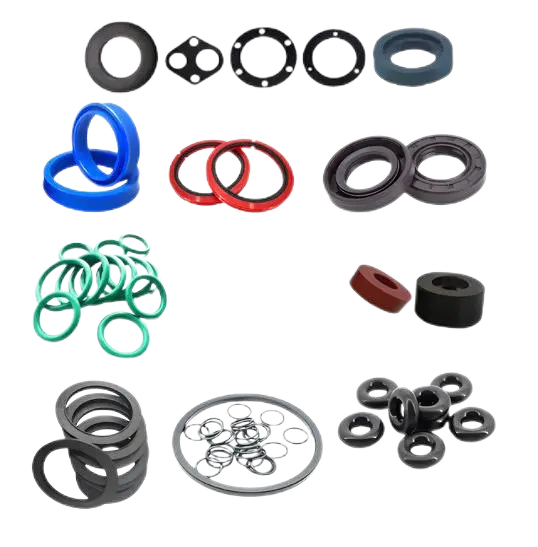
As one of the experienced oil seal manufacturers, Axis also provides a complete range of oil sealing solutions for industrial, automotive, and heavy-equipment applications. Beyond the widely used TC oil seal and TG oil seal, we offer multiple types of oil seal for sale. Whether you're looking for enhanced contamination resistance, longer service life, or fully customized geometries, Axis delivers stable, durable, and application-specific sealing products. Explore our oil seal range to find the right solution for your equipment.