How O-Ring Seals Work: The Complete Guide to Reliable Sealing Solutions
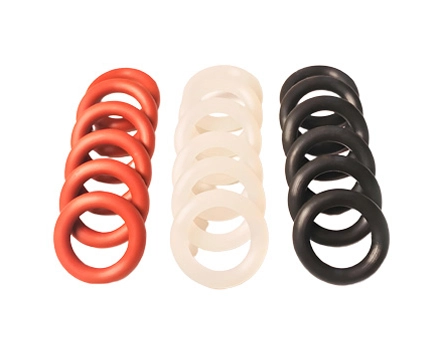
O-rings, also known as rubber O-ring seals, are among the simplest yet most effective components in modern engineering. These small, torus-shaped elastomeric rings play a critical role in preventing leaks of liquids and gases across countless industrial applications. From automotive engines to aerospace systems, a single failed O-ring can lead to costly downtime, safety hazards, or environmental damage. That's why understanding the o ring sealing principle is essential for anyone involved in design, maintenance, or procurement. In this comprehensive guide, we'll explore exactly how rubber O-ring sealing solutions work, their real-world applications, material options, selection criteria, and failure prevention strategies.
Whether you're specifying seals for a new hydraulic system or troubleshooting existing equipment, this article delivers the practical insights you need. At Axis Rubber, a leading O-ring manufacturer with decades of expertise, we specialize in delivering precision-engineered rubber O-ring sealing solutions that perform reliably under the toughest conditions.
What Is an O-Ring Seal?
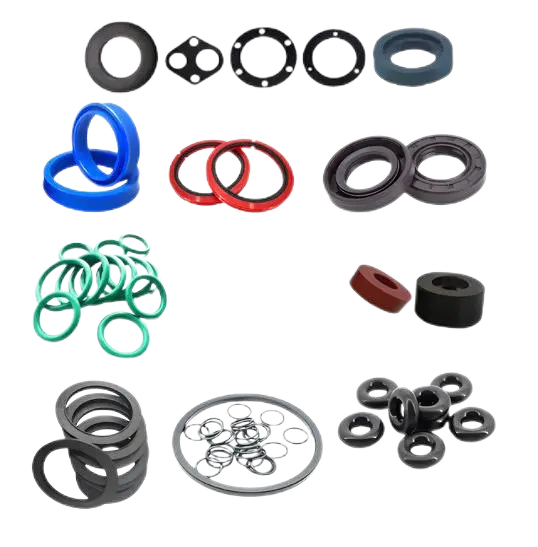
An O-ring seal is a precision-molded, doughnut-shaped (torus) elastic component designed to create a leak-proof barrier between two mating surfaces. Unlike flat gaskets, its circular cross-section allows it to deform under pressure and fill microscopic gaps effectively. Manufactured from high-performance elastomers such as Nitrile (NBR), Fluorocarbon (FKM/Viton), Ethylene Propylene Diene Monomer (EPDM), or Silicone, O-rings combine resilience, chemical resistance, and temperature tolerance to meet diverse operating demands.
Their primary function is straightforward yet vital: they seal pathways for gases or liquids by occupying the space between stationary or moving parts. You’ll find them in hydraulic systems, valves, pumps, compressors, and medical devices—essentially anywhere fluid or gas containment is non-negotiable. The magic lies in how an O-ring works: when installed and compressed, it fills the gap between the two contact surfaces, creating a continuous sealing line that blocks fluid migration.
At its core, an O-ring prevents leakage by filling the clearance between two mating surfaces through elastic deformation. This simple mechanism has made O-rings the go-to solution for engineers worldwide, delivering reliable performance in environments ranging from low-pressure water lines to extreme high-pressure oil fields.
How O-Ring Seals Work (Step-by-Step Explanation)
The o ring sealing principle is elegant in its simplicity, relying on basic physics—compression, elasticity, and pressure—to deliver outstanding results. Here's exactly how it happens in four clear steps.
Step 1 – Installation in the Groove
Every reliable seal begins with proper o ring groove design. The O-ring is placed into a precisely machined recess, called a gland or groove, in one of the mating components. The groove dimensions are engineered to hold the O-ring securely while allowing controlled deformation during assembly. When the second component is mated, the O-ring is squeezed between the two surfaces. This initial compression establishes the foundation for sealing by positioning the ring exactly where it needs to be.
Step 2 – Compression Creates Initial Seal
Once installed, the O-ring undergoes 15–30% compression (the optimal range for most applications). This squeeze generates a strong contact force against both mating surfaces, creating what engineers call the "sealing line." The elastic material pushes back with equal force, filling even the tiniest surface irregularities. At this stage, the rubber O-ring sealing solution already prevents low-pressure leaks through pure mechanical interference—no external pressure required.
Here’s where the o ring sealing principle truly shines. When system pressure rises, the fluid or gas pushes against the O-ring, forcing it tighter against the low-pressure side of the groove. The higher the pressure (within the O-ring's rated limits), the greater the sealing force becomes. This self-energizing effect is why O-rings excel in high-pressure environments: the very medium they’re containing actually improves the seal. It's a brilliant feedback loop that turns potential leakage into stronger containment.
Step 4 – Elastic Recovery Maintains Seal
When pressure drops or the system is disassembled, the O-ring's built-in elasticity allows it to recover its original shape. This resilience ensures the seal remains effective through thousands of pressure cycles. Because of this recovery, properly specified O-rings offer exceptional durability and long service life—translating directly into lower maintenance costs and higher return on investment for industrial operations. At Axis Rubber, our O-rings are formulated and tested to maximize this elastic recovery, giving customers confidence in long-term reliability.
Types of O-Ring Sealing Applications
O-rings are versatile enough to handle both static and dynamic sealing duties, but the demands differ significantly.
Static Sealing
In static applications, there is no relative motion between the sealed parts. Typical uses include flange connections, pipe joints, valve covers, and cylinder heads. The O-ring simply sits in its groove and maintains a constant seal under pressure. Because there's no sliding or rotation, wear is minimal, and service life is often measured in years rather than hours.
Dynamic Sealing
Dynamic seals must accommodate movement—either reciprocating (back-and-forth) or rotary. You'll see them in hydraulic cylinders, pneumatic actuators, pistons, and rotary shafts. Here, the static vs dynamic o ring seal distinction matters: dynamic applications require specialized groove designs, smoother surface finishes, and often harder or lubricated materials to minimize friction and wear. Axis Rubber engineers dynamic O-rings with these exact requirements in mind, ensuring smooth operation even under continuous motion.
Key Factors That Affect O-Ring Sealing Performance
Several critical variables determine whether an O-ring will perform flawlessly or fail prematurely. Consider these factors during design and procurement:
Material compatibility: The elastomer must resist the specific fluid, temperature, and chemical environment. Incompatible materials swell, shrink, or degrade rapidly.
Compression ratio: The sweet spot is typically 15–30%. Too little compression allows leaks; too much causes permanent set or extrusion.
Pressure and temperature extremes: Higher pressure demands stiffer materials and tighter tolerances; temperature swings affect elasticity and hardness.
Surface finish: The mating surfaces should be smooth (typically 16–32 microinches Ra) to reduce abrasion.
Groove design: Proper width, depth, and radius prevent pinching or extrusion while allowing thermal expansion.
Axis Rubber offers full engineering support for custom materials, sizes, and groove recommendations, ensuring every rubber O-ring sealing solution is optimized for your exact operating conditions.
Common O-Ring Materials and Their Advantages
Choosing the right material is perhaps the most important decision in o ring material selection. Here's a clear comparison of the most widely used elastomers:
Material
Key Features
Typical Applications
Temperature Range
NBR (Nitrile)
Excellent oil and fuel resistance, cost-effective
Automotive, hydraulic systems, pumps
-40°F to +250°F
FKM (Viton)
Superior heat and chemical resistance
Chemical processing, aerospace, fuel systems
-15°F to +400°F
EPDM
Outstanding resistance to water, steam, and ozone
HVAC, water treatment, food processing
-60°F to +300°F
Silicone
Exceptional flexibility and low-temperature performance, FDA-compliant grades available
Medical devices, food equipment, electronics
-80°F to +450°F
Each material brings unique strengths, allowing engineers to match the O-ring precisely to the application's demands.
Advantages of Using O-Ring Seals
O-rings outperform traditional gaskets and seals in almost every measurable way. They are inexpensive to manufacture and stock, incredibly easy to install (no special tools required in most cases), and capable of handling extreme pressures—up to several thousand psi when properly designed. Because they create a positive seal with minimal clamping force, they reduce assembly time and bolt torque requirements. Maintenance costs stay low thanks to their long service life and reusability in many static applications. Compared to flat gaskets, O-rings deliver far greater reliability in high-pressure environments, virtually eliminating the risk of blowouts or uneven compression that plague older sealing methods.
Common O-Ring Failure Causes (And How to Avoid Them)
Even the best O-rings can fail if not properly specified or installed. The most frequent issues include:
Extrusion: High pressure forces the O-ring into the clearance gap. Solution: Use backup rings or tighter groove tolerances.
Aging and chemical degradation: Exposure to incompatible fluids or UV/ozone causes hardening or cracking. Solution: Select the correct elastomer and store parts away from sunlight.
Wear and abrasion: Common in dynamic applications with rough surfaces. Solution: Specify polished rods and compatible lubricants.
Installation damage: Twisting, pinching, or cutting during assembly. Solution: Use proper lubrication and installation tools.
Understanding these o ring failure reasons and following best practices for how to prevent o ring leakage dramatically extends seal life and protects your equipment.
How to Choose the Right O-Ring for Your Application
Successful selection follows a systematic process:
Determine the exact dimensions (inside diameter, cross-section, and groove fit).
Analyze the operating environment—temperature, pressure, and media.
Decide between static or dynamic duty.
Reference industry standards such as AS568 (inch) or ISO 3601 (metric).
When off-the-shelf options fall short, custom solutions become the smart choice. Axis Rubber stands ready to help with rapid prototyping, material testing, and full-scale production.
Why Choose Axis Rubber as Your O-Ring Manufacturer
With decades of specialized experience, Axis Rubber has earned a reputation for delivering rubber O-ring sealing solutions that exceed expectations. Our advanced manufacturing facilities produce millions of O-rings annually under strict ISO-certified quality control. We offer full customization—special compounds, non-standard sizes, and rapid turnaround. Our global supply chain ensures reliable delivery anywhere in the world, while our engineering team provides free technical consultation to optimize your designs.
Ready to experience the difference? Request a quote today or get free samples to test in your application. At Axis Rubber, we don't just sell O-rings—we deliver peace of mind through superior sealing performance.
Conclusion
At its heart, the o ring sealing principle is beautifully straightforward: controlled compression creates the initial barrier, system pressure self-energizes the seal, and the material’s elasticity ensures long-term reliability. This combination of simplicity and sophistication explains why O-rings remain the world's most trusted sealing solution across every major industry.
By understanding how they work, selecting the right material and design, and partnering with an experienced manufacturer like Axis Rubber, you can achieve leak-free performance that maximizes uptime and minimizes costs. Whether your needs involve standard catalog parts or highly engineered custom solutions, reliable rubber O-ring sealing solutions are within reach. Contact Axis Rubber today—your equipment deserves nothing less than the best.