In the world of mechanical sealing, rubber gaskets and O-rings are two of the most commonly used components. Each serves the essential function of preventing leakage and maintaining pressure, but they have distinct characteristics that make them suitable for different applications. Understanding the key differences between rubber gaskets and O-rings, as well as the materials used for each, can help you make the right choice for your specific needs.
Key Differences
1. Shape and Design
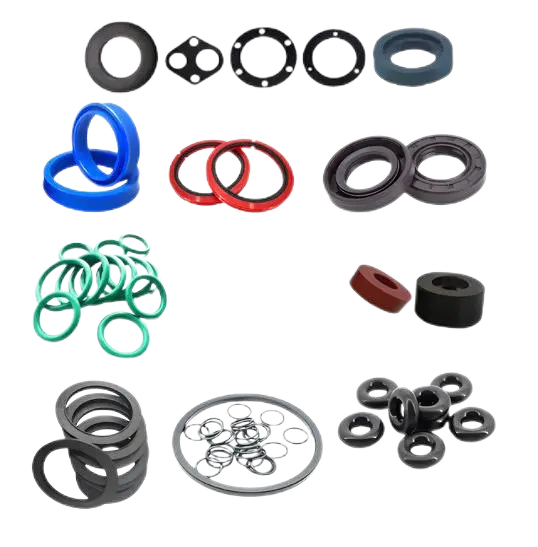
Rubber Gaskets: These are typically flat, flexible sheets made from various rubber materials. They can be cut or molded into a wide range of shapes and sizes to fit specific applications. Rubber gaskets are often used to create a seal between two stationary surfaces, such as in flange joints or between machine components.
O-Rings: As the name suggests, O-rings are circular in shape and are designed to be seated in a groove. They rely on their round shape to create a seal by deforming slightly when compressed between two surfaces. O-rings are commonly used in both static and dynamic applications, such as in hydraulic systems, pistons, and rotating shafts.
2. Sealing Mechanism
Rubber Gaskets: The sealing effectiveness of a rubber gasket depends on its ability to conform to the surfaces it is placed between. The gasket material must be soft enough to fill in any irregularities in the mating surfaces, creating a barrier against fluids or gases.
O-Rings: O-rings create a seal through the application of radial pressure. When installed in a properly designed groove, the O-ring is compressed between the two surfaces, causing it to slightly deform and fill the space, thereby preventing leakage.
3. Installation and Replacement
Rubber Gaskets: Installation typically involves placing the gasket between two surfaces and securing it with bolts or clamps. Replacement usually requires disassembling the joint, which can be time-consuming, especially in complex systems.
O-Rings: O-rings are generally easier to install and replace. They are simply placed into a groove and compressed when the components are assembled. This makes them a more convenient option in applications where frequent maintenance or replacement is necessary.
Materials
1. Rubber Gaskets
Neoprene: A general-purpose rubber with good resistance to oil, ozone, and weather. It is widely used in automotive and industrial applications.
Nitrile (Buna-N): Offers excellent resistance to oils and fuels, making it suitable for fuel systems and hydraulic applications.
EPDM: Known for its outstanding resistance to heat, ozone, and weather. It is commonly used in automotive cooling systems and outdoor applications.
Silicone: Provides exceptional temperature resistance, from extreme cold to high heat. It is often used in foodservice equipment and high-temperature applications.
Viton: A high-performance fluoroelastomer with excellent resistance to heat and a wide range of chemicals. It is used in demanding applications such as aerospace and chemical processing.
2. O-Rings
Nitrile (Buna-N): The most common material for O-rings due to its excellent abrasion resistance and suitability for a wide range of temperatures and media.
Viton: Highly resistant to heat and chemicals, making it ideal for high-temperature and aggressive chemical environments.
EPDM: Offers good resistance to water, steam, and ozone, making it suitable for applications exposed to these elements.
Silicone: Provides excellent temperature resistance and is often used in applications requiring FDA compliance, such as food and pharmaceutical equipment.
Fluorosilicone: Combines the temperature resistance of silicone with improved fuel and oil resistance.
When to Use Each
1. Rubber Gaskets
Static Sealing: Rubber gaskets are ideal for creating a static seal between two stationary surfaces, such as in flange joints, valve covers, and engine components.
Irregular Surfaces: When the mating surfaces are not perfectly smooth or have irregularities, a rubber gasket can conform to these surfaces to create an effective seal.
High-Temperature Applications: Certain rubber materials, such as silicone and Viton, can withstand high temperatures, making them suitable for applications like exhaust systems and ovens.
Chemical Resistance: Depending on the material, rubber gaskets can be chosen for their resistance to specific chemicals, such as acids, oils, or fuels.
2. O-Rings
Dynamic Sealing: O-rings excel in dynamic applications where there is movement between the sealed surfaces, such as in hydraulic cylinders, pistons, and rotating shafts.
Compact Design: When space is limited, O-rings are a preferred choice due to their small size and ability to provide an effective seal in a compact space.
Standardized Sizes: O-rings are available in a wide range of standardized sizes, making it easier to find the right fit for your application.
Ease of Installation and Replacement: In applications where frequent maintenance or replacement is necessary, O-rings offer the advantage of quick and easy installation and removal.
Conclusion
Choosing between a rubber gasket and an O-ring depends on the specific requirements of your application. Rubber gaskets are versatile and can be customized to fit various shapes and sizes, making them suitable for static sealing and irregular surfaces. O-rings, on the other hand, are ideal for dynamic applications and offer the benefits of a compact design and easy installation.
By understanding the key differences, materials, and appropriate use cases for each, you can make an informed decision that will ensure the reliability and longevity of your sealing solution. Whether you need a custom-shaped rubber gasket for a flange joint or a durable O-ring for a hydraulic system, selecting the right sealing component is crucial for the efficient operation of your equipment.
As one of the most professional rubber gasket manufacturers and long-established rubber oil seal manufacturers, Axis provides a complete portfolio of sealing products for industrial, automotive, hydraulic, and heavy-equipment applications. In addition to precision-molded rubber gaskets available through our rubber gasket for sale range, we also supply multiple types of oil seals . You can further explore our full selection of seals through our oil seal for sale, and contact our engineering team for custom designs tailored to your specific operating conditions.