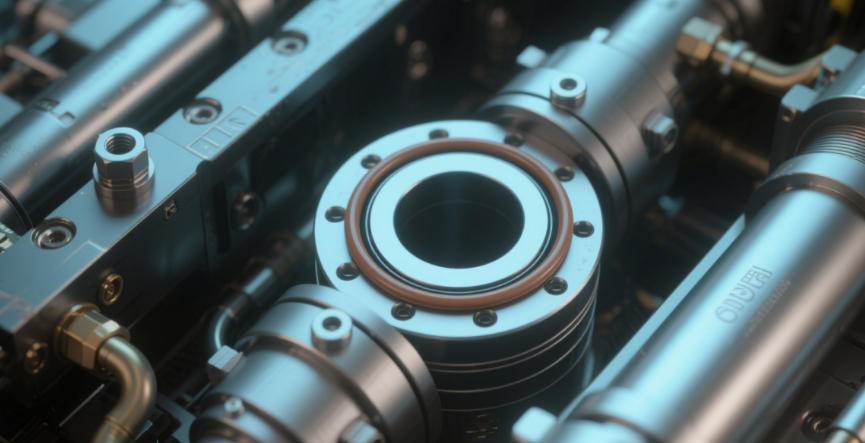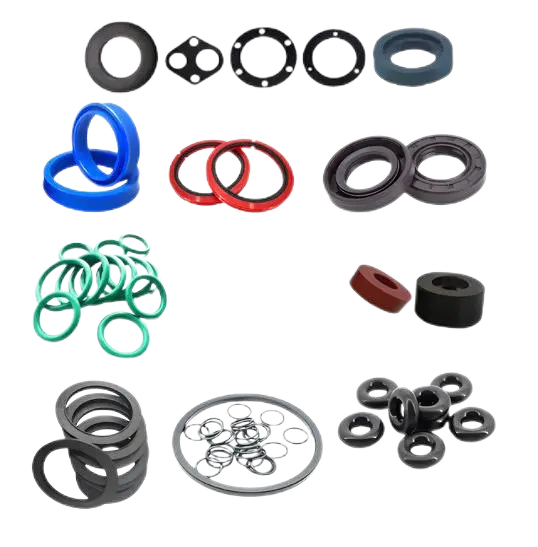
In various industrial applications, hydraulic cylinders are extremely critical components, and among them, the role of O-rings is particularly pivotal. Though seemingly small, O-rings exert a decisive influence on the normal operation of hydraulic cylinders and even the entire hydraulic system.

The primary function of O-rings is sealing. Hydraulic cylinders rely on hydraulic oil to transmit pressure for mechanical movement. If leakage occurs, pressure cannot be effectively maintained, leading to a significant drop in the working efficiency of the hydraulic cylinder, or even complete failure. For example, the telescoping of the excavator arm in construction hydraulic excavators depends on the power provided by hydraulic cylinders. If the O-ring seal in the hydraulic cylinder fails and hydraulic oil leaks, the excavator arm will struggle to perform digging actions accurately and powerfully, seriously affecting the construction progress. In principle, during installation, O-rings are compressed radially or axially to generate initial sealing force. As the system pressure increases, O-rings deform under pressure, further filling the sealing gap and increasing the sealing force, thereby effectively preventing hydraulic oil leakage, just like building a solid "dam" for the leakage channel.
Stable system pressure is the foundation for the normal operation of hydraulic cylinders. The excellent sealing performance of O-rings ensures effective pressure transmission within the system and avoids pressure fluctuations. Taking the hydraulic system of an injection molding machine as an example, the injection process requires hydraulic cylinders to provide stable pressure to push the screw and inject molten plastic into the mold. Once O-rings have problems causing pressure leakage, the injection pressure will become unstable, resulting in a sharp decline in the dimensional accuracy and surface quality of the produced plastic products, and a significant increase in the defective rate.
In addition to preventing hydraulic oil leakage, O-rings can also block external contaminants from entering the interior of hydraulic cylinders. Impurities in hydraulic oil will accelerate the wear of components such as pistons and piston rods inside hydraulic cylinders, shortening their service life. In the metallurgical industry, there is a large amount of dust in the environment. Without the effective protection of O-rings, dust and other impurities will enter hydraulic cylinders, accelerating the wear between the piston and the cylinder wall, leading to frequent failures of hydraulic cylinders and a substantial increase in maintenance costs.
Regular inspection is an important means to detect O-ring problems in a timely manner. Operators should conduct visual inspections of O-rings at the intervals specified in the equipment maintenance manual, checking for signs of wear, deformation, cracking, etc. For instance, in the maintenance of hydraulic cylinders of punch presses in automobile manufacturing plants, O-rings are inspected weekly. If slight cracks are found on the surface of O-rings, although no leakage may have occurred yet, it indicates that the performance of O-rings has declined and they need to be replaced promptly to prevent the expansion of faults.
When installing O-rings, operations must be carried out in strict accordance with specifications. Before installation, ensure that the installation site is clean, free of impurities and burrs. If there are impurities such as metal shavings at the installation site, they may be embedded during the O-ring installation process, damaging the sealing performance. Appropriate tools should be used during installation to avoid scratching or overstretching O-rings. For example, when installing O-rings for the hydraulic cylinders of large ship steering gears, special installation sleeves are required to ensure that O-rings are installed evenly in place without distortion or deformation, which could affect the sealing effect.
The performance of O-rings is greatly affected by the working environment. O-rings of appropriate materials should be selected based on working temperature, pressure, type of hydraulic oil, etc. For hydraulic cylinders working in high-temperature environments, such as those used in steel ladle lifting equipment in steel mills, high-temperature resistant fluororubber O-rings should be selected; for low-temperature environments, such as hydraulic handling equipment in cold storage, silicone rubber O-rings that can remain flexible at low temperatures should be used. If the working environment pressure is too high, the pressure resistance of O-rings should also be considered, and protective measures should be added if necessary to prevent O-rings from being squeezed into gaps and damaged.
When O-rings show obvious signs of wear, aging, deformation, or leakage, they must be replaced in a timely manner. O-rings of the same specification and model as the original should be selected for replacement. In the hydraulic systems of agricultural machinery, due to the harsh working environment, O-rings wear quickly. Once problems are found, the machine should be shut down immediately for replacement to avoid minor issues leading to more serious equipment failures and affecting agricultural production operations.
O-rings play an irreplaceable role in hydraulic cylinders, and their performance directly relates to the reliability and service life of hydraulic cylinders and even the entire hydraulic system. Through proper maintenance and rational use of O-rings, hydraulic cylinders can operate efficiently and stably, providing strong support for industrial production.