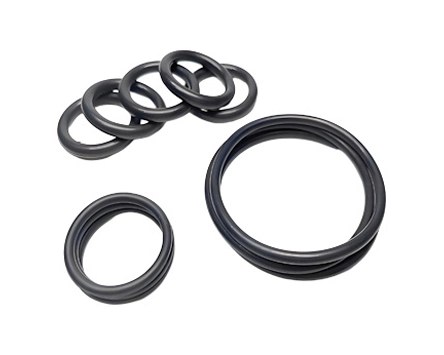
If you’re specifying rubber seals for a new project or replacing a failed seal on existing equipment, one of the first questions you’ll face is which material to pick. The four most common materials used for rubber seals are NBR, EPDM, silicone, and FKM — and each has its own sweet spot where it outperforms the others. Pick the wrong one, and you could be looking at premature failure, leaks, and costly downtime.
Let’s break down what each material is good for, where it falls short, and which one you should choose for your application.
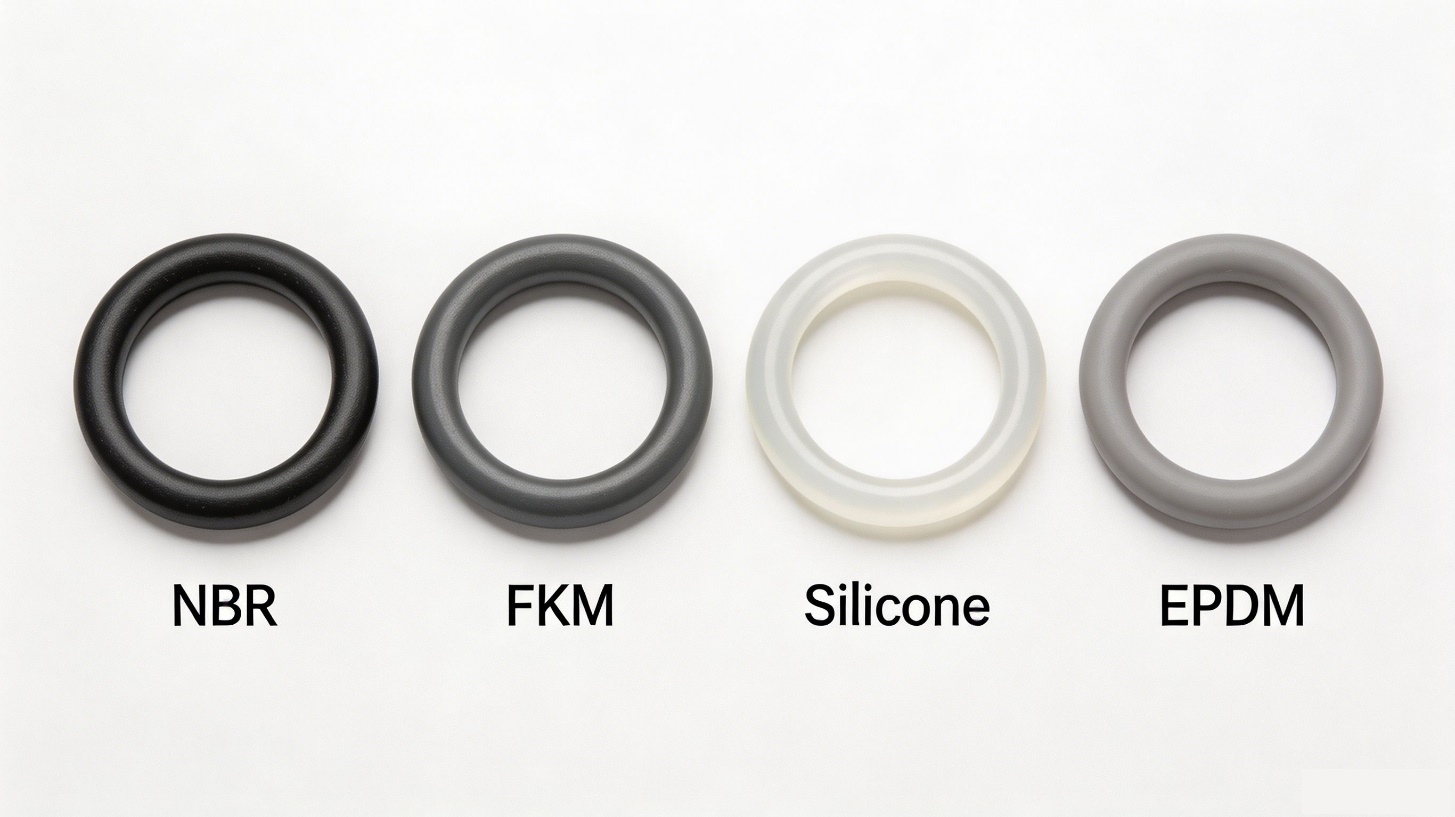

Nitrile (NBR) is the workhorse of the rubber sealing world. It’s a copolymer of butadiene and acrylonitrile, and the acrylonitrile content is what gives it its excellent resistance to mineral oils, fuels, and greases.
Key properties:
- Great resistance to non-polar fluids like mineral oils, gasoline, and diesel
- Good mechanical strength and abrasion resistance
- Low compression set
- Much cheaper than fluorocarbon materials like FKM
Typical applications: - Hydraulic system seals - Engine oil seals - Fuel system gaskets and hoses - O-rings for general industrial use
When to choose NBR: If you’re sealing against oil or fuel and your operating temperatures stay below 120°C, this is almost always your best bet. It’s cheap, it works, and it’s readily available in all standard sizes.
When NOT to choose NBR: Don’t use it outdoors where it’s exposed to weather and ozone — it will crack in a couple of years. It’s also not suitable for polar fluids like brake fluid, which will make it swell and fail.
EPDM is ethylene propylene diene monomer rubber, and it’s specifically designed for outdoor exposure and resistance to weathering, ozone, and water.
Key properties: - Outstanding resistance to UV, ozone, and atmospheric weathering - Good resistance to hot water and steam - Excellent resistance to polar fluids like brake fluid, alcohols, and ketones - Good low-temperature flexibility
Typical applications: - Automotive weatherstripping - Roofing membranes - HVAC system seals - Irrigation system gaskets - Brake system seals
When to choose EPDM: If your seal is going to be sitting outside in all weather, or it’s in contact with hot water/steam or brake fluid, EPDM is usually the right call. It’s also reasonably priced, so you get a lot of weather resistance for the money.
When NOT to choose EPDM: Never use EPDM with mineral oils, gasoline, or hydrocarbon fuels — it will swell up like a sponge and fall apart quickly.
Silicone rubber is one of the most versatile materials around, with an extremely wide temperature range and good biocompatibility.
Key properties: - The widest working temperature range of the four materials we’re covering here - Excellent resistance to ozone and weathering - Very low toxicity, so it’s easy to get FDA approval for food and medical use - Good compression set resistance at high temperatures
Typical applications: - Food processing equipment seals - Medical and pharmaceutical devices - High-temperature gaskets - Automotive engine compartment seals where heat is a problem - Electronics insulation
When to choose Silicone: If you need a food-grade seal, or you’re dealing with constant temperatures above what NBR can handle but below what FKM is needed for, silicone is a great option.
When NOT to choose Silicone: Silicone doesn’t hold up well to oil and fuel, and it’s not as mechanically strong as other materials for dynamic sealing applications. It’s also more expensive than NBR or EPDM, so you only want to use it where you actually need its specific properties.
FKM is fluorocarbon rubber, commonly known by the brand name Viton® (though Viton is just Chemours’ brand of FKM). It’s the go-to material for really harsh environments where other materials won’t survive.
Key properties: - Outstanding resistance to high temperatures - Unmatched chemical resistance to a wide range of aggressive chemicals, fuels, and acids - Excellent weather and ozone resistance - Very low compression set
Typical applications: - Chemical processing equipment seals - Aerospace fuel system seals - Oil and gas downhole tools - High-temperature exhaust system gaskets - Automotive turbocharger seals
When to choose FKM: If you’re dealing with temperatures above 150°C, or aggressive chemicals that NBR and EPDM can’t handle, you need FKM. It’s expensive, but it’s the only material that will last in those environments.
When NOT to choose FKM: You don’t need FKM for most standard applications, and it adds unnecessary cost. If NBR or EPDM will work for your temperature and chemical environment, use them instead.
Industry | Recommended | Why |
Automotive (engine/fuel) | NBR / FKM | Oil/fuel resistance |
Food & Beverage | Silicone | FDA compliant, non-toxic |
Outdoor Construction | EPDM | UV/weather/ozone resistance |
Oil & Gas | FKM | Extreme chemical resistance |
Medical/Pharma | Silicone | Biocompatibility |
Agricultural Irrigation | EPDM | Weather/water resistance |
Choosing the right rubber material doesn’t have to be complicated, but getting it wrong costs you time and money down the road. If you’re still not sure which material is right for your specific application, send us your drawing or application details and our engineering team will recommend the best option — free of charge.
Q: Can EPDM be used with oil?
A: Generally no. EPDM does not resist mineral oils or hydrocarbons at all. It will swell significantly and fail quickly. Use NBR or FKM for oil applications.
Q: Is NBR suitable for outdoor use?
A: No, NBR has poor ozone and weather resistance. It will crack and become brittle after a couple of years outdoors. Use EPDM for outdoor applications.
Q: What’s the price difference between NBR, EPDM, Silicone and FKM?
A: NBR and EPDM are generally the lowest cost. Silicone is about 2-3 times more expensive than NBR, and FKM is typically 4-6 times more expensive than NBR.
Q: How do I know which rubber material I need?
A: Start by asking three questions: What temperature will it operate at? What fluids or chemicals will it be exposed to? Is it for indoor or outdoor use? That will usually narrow it down to one or two options. If you’re still stuck, contact us and we’ll help you figure it out.